


Plans for a giant digital billboard opposite Battersea Arts Centre have been withdrawn, after attracting objections from residents and raising concerns about the spread of large-format advertising in Battersea.
The Sisters Avenue scheme, which would have installed a 24-square-metre LED screen facing a busy residential stretch, had raised fresh concerns about the growing spread of large-format digital advertising in Battersea. While such displays are not new to the area, the scale of this proposal — larger than some London flats — had drawn particular scrutiny from residents and campaigners. Its withdrawal, before a decision was reached, leaves open the question of whether similar applications will return in a borough increasingly targeted by outdoor advertising firms.
We’ve seen a steady stream of these proposals over the last couple of years, with a few big advertising firms rushing to install these highly profitable displays wherever they can get away with it, typically on the end walls of terraces where they are as visible as possible to passing traffic. Most have been refused permission by the Council; the developers invariably appeal to central government to try and override the decisions – but the Council, who aren’t fools when it comes to planning, has generally won these appeals.

The image in the planning extract above shows the location – at the corner of Sisters Avenue and Lavender Hill. It looks quite tame, almost tasteful, in the picture – but of course what the image doesn’t show is the blazing illumination and dynamic nature of the screen!
Our photo below is maybe a more typical view of what we might get, of the advert at the back of Sendero’s building on Queenstown Road at dawn. That advert is pretty intense for something that has a fair few bedroom windows facing it. It occasionally gets toned down a bit when people manage to track down the owners, but funnily enough at the next system update it tends to mysteriously revert to the ‘brighter than the sun’ illumination setting. The one that had been proposed at Sisters Avenue was set to be the same sort of thing – but larger.

There are already a couple of paper-based advertising hoardings at the end of Sisters Avenue, seemingly dating back to the early 1980s when few cared what happened to the run down buildings along Lavender Hill. As far as we can tell, no one bothered to get planning permission for those, so (maybe fortunately) they don’t give much of a planning precedent.
The companies involved generally argue that changing these old advert boards for digital screens is environmentally friendlier because no one will have to take van out every couple of months to change the posters (conveniently overlooking the electricity consumption of producing and running a 24 square metre 24-hour digital screen, but then that’s the art of planning statements). In this case the developers also argue that the new sign will ‘reduce physical signage and improve the visual coherence of the elevation’, though whether a much more prominent and illuminated sign will do this feels doubtful.
- Read another controversial digital advert (refused) off Lavender Hill in 2021: Is a digital advertising screen appropriate in a small residential street?
The companies behind these proposals aren’t daft, they know that no one really wants these things on their street. They’re ugly, they keep nearby residents awake with an ever-changing kaleidoscope, and for those in the wider area they turn a fairly attractive and mainly well preserved Victorian streetscape in to something more akin to driving along the parade of huge billboards along the M4 viaduct. The developers usually hope that a distracted and overworked planning officer at the Council will accidentally wave it through, or not make a sufficiently strong case against it for the rejection to stand up on appeal.
A variety of other more dubious ‘public benefit’ advantages are typically cited in the planning applications – ‘high quality design’, somewhere for local businesses to advertise, the ability to broadcast emergency messaging, the use of ‘void periods’ for public information and public art campaigns, maybe even business rates from the advertising income – but this is all nonsense really, we all know these things are there for one reason, which is to show adverts.
And to be frank, there’s nothing inherently wrong with digital advertising – and these big screens genuinely can work well in the right place. But the right place for a 24 square metre illuminated screen is next to a flyover on the M4 (where the mix of big adverts scattered between the multistorey car showrooms have become a positive feature of one of London’s more unusual and unique landscapes), or in the middle of Wandsworth roundabout (where adverts in the middle of the Wandsworth Atom have become a sort of symbol of that bit of town). Not in a narrow Victorian residential street next to a Grade II* listed building.
People trying to install these in Battersea often argue that similar adverts have been approved in some other areas of London so should be fine here – but when you look closely those other areas tend to not be densely built residential streets.
- Read our article: Advertising board on Wessex house refused
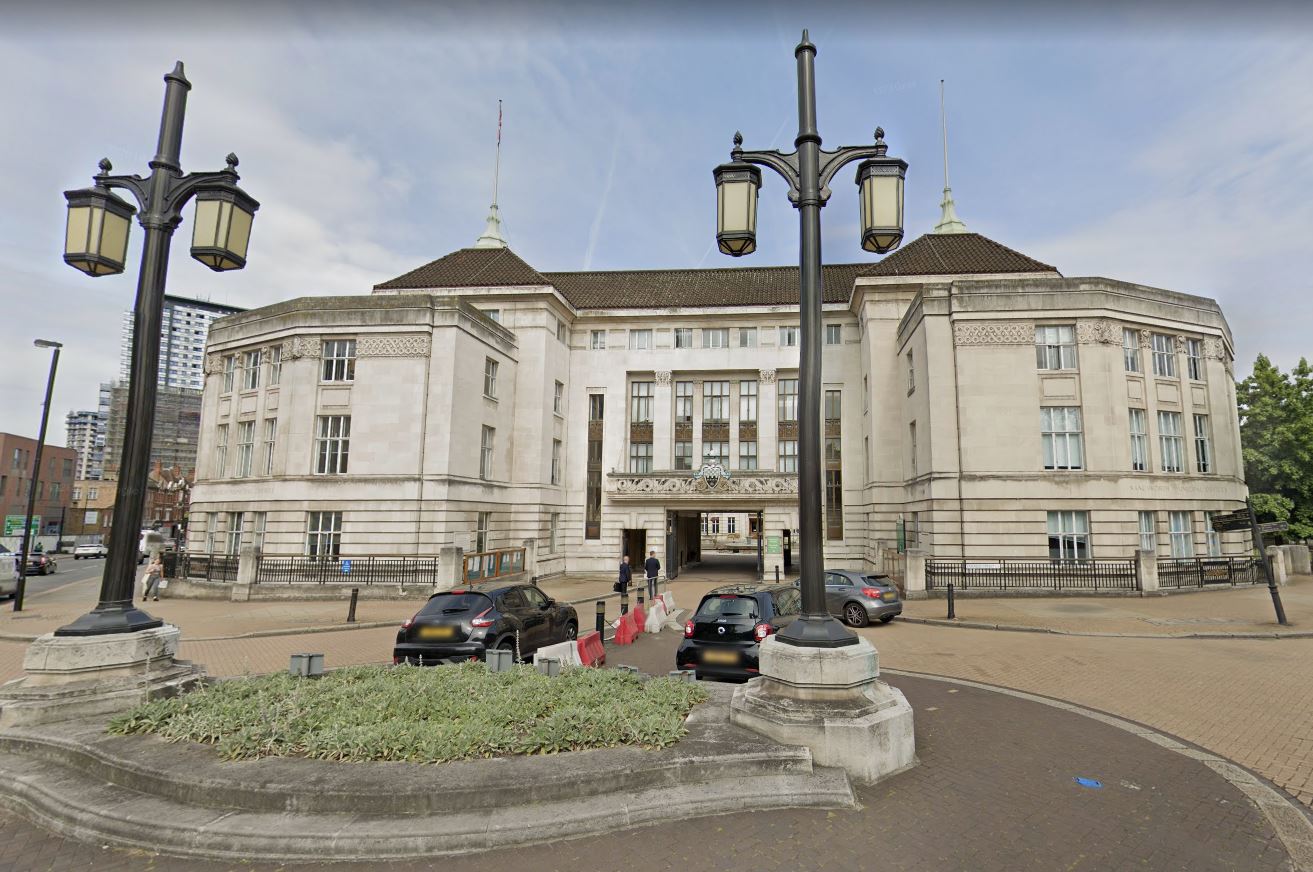
And the local context here matters: Sisters Avenue is a key part of the setting of Battersea’s old civic district, with a street lined by the largest and grandest houses in the Borough – generally detached, a rarity in the area – leading up to the town hall (now Battersea Arts Centre). There used to be a large theatre here too, but that was damaged by German bombs and demolished in 1955 (to be replaced by the rather less glamorous ‘Shakespeare House’ building, that now has Foxtons on its ground floor).
The street has lost a little of its status since the town hall moved to Wandsworth, and the once spectacular houses are now subdivided to flats, but the overall sense of Sisters Avenue & this bit of Lavender Hill being an important bit of Battersea – built to convey the power and importance of a growing Borough – remains strong.

The Council has removed several billboards and refused digital screens
The negative impact of billboard adverts isn’t lost on the Council. Over the last few years they have worked behind the scenes to get rid of many of the big poster advertisements from gable ends, as part of their efforts to create a more attractive town centre (for example, adverts have gone from the side of buildings on gable ends on Kathleen Road (opposite the Magistrates court), Tipthorpe Road, Stormont Road, and Rush Hill Road.
They’ve refused digital screen proposals at the eastern end of Lavender Hill, and – thanks to carefully considered refusals, and the proposals being pretty suspect – also won the subsequent appeals.
So we’d be surprised if they allowed a huge new advert to go against all this work, especially given the wider planning context – which includes the National Planning Policy Framework (which makes it very clear that the design of the built environment and good design is a key aspect of sustainable development – encouraging new developments to respond to local character & history, and reflect the identity of local surroundings), and the Local Plan (which steers new developments to ensure a high level of physical integration with their surroundings, and consider broader ‘placemaking’).
The Local Plan also requires new developments like this to relate positively to the prevailing local character and (importantly) the emerging character where the context is changing – which it has been doing for a number of years on Lavender Hill, as it increasingly focusses on food and drink venues that are competing with St John’s Road and Northcote Road, and where the street really needs to look its best to attract customers and offset the more trafficky environment.

It’s not just about the visuals though. These big adverts are typically made up of a lot of smaller screens, as well as transmission and power equipment, all of which need access for maintenance. On the basis of other similar ones, such as the one at the Latchmere junction pictured above (which has a whole internal room – you can just about make out the door on the side that’s used for maintenance access), it’s likely that it will overhang the pavement quite a bit, and cause yet another area where residents are exposed to falling debris from pigeons.
Worse, these large and heavy pieces of equipment have a disconcerting tendency to fall off the walls without notice! Maybe the most famous local example was on the Mitcham Road in Tooting in 2015, when one of the adverts just like the one in our picture above fell off the wall during the morning rush hour, dropping about 20 feet and crushing a woman.

Maybe these big adverts do, as some of their proponents argue, ‘activate the street scene’, helping householders discover new products and services that may be of interest from the convenience of their own bedroom windows, and bringing a sense of inspiration, wonder and delight to even the quietest side streets. Perhaps a touch of Blade Runner aesthetics is just what we need to drag our fusty old-fashioned town centres in to the digital age. Or perhaps these are just another cynical attempt to push advertising in to every corner of our cities, ready to trash what remains of the carefully designed civic centre Battersea’s residents built back when it was a new Borough caught up in London’s break neck industrialisation of the 1890s for the sake of a few more spots to push the latest cars, vapes, VPN services and fast food.
Its withdrawal can mean a few things – maybe they have realised it won’t get through so they want to tweak it significantly and then resubmit it (which, if they do so within 12 months, they can usually do without paying another £588 fee), or – because withdrawing the application also withdraws the objection comments that went in (we’ve checked, there had only been objections so far!) it can mean that they’re a dodgy developer looking to quietly resubmit the same thing in a couple of months and hope that residents think “we’ve objected, all good, obviously no need to do so again” but it can make it look to the officials handling any appeal as though there were ‘no objections’.
In due course we’ll see what Wandsworth’s planning team make of any future proposal – and, if they refuse it and it inevitably goes to appeal, what the government planning inspectors reckon. As ever, we’ll keep you posted.
To see the proposals, visit wandsworth.gov.uk/planning, and search for planning application 2026/0404.
This article was originally published on lavender-hill.uk and edited for CJI.