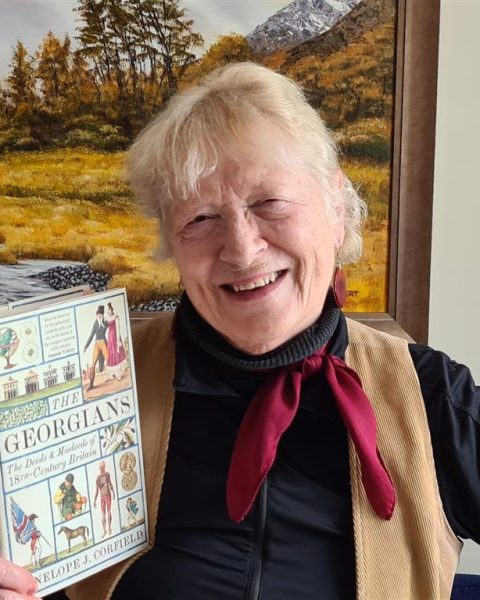



A local historian has taken London residents on a tour of Lavender Hill area to highlight the forgotten female pioneers, as Wandsworth continues to commemorate the unheard icons of the borough.
When Jeanne Rathbone began taking residents on tours seven years ago, there were only ten women featured, a number that’s since jumped to 16. A diverse group of pioneers have lived in Lavender Hill, with the tour featuring suffragists, socialists, councilors, Black activists, aviators, artists and more.
Jeanne’s last tour in September ran all across Battersea in search of these women’s lives, with more than a dozen people turning out to discover the history of the area. The Battersea Society has erected blue plaques all over the borough – unofficial markers for notable people in the area, which form the majority of plaques to the borough’s pioneers shown on the tour.
Green and Blue plaques, what are they?
You may also have have seen, on occasion, green plaques in the borough. Those are part of Wandsworth Council’s scheme to recognise its local pioneers, while the Battersea Society places its own plaques to those it also considers overlooked. These can also be placed by other local organisations, such as the Battersea Labour Party.
As a member of the Battersea Society, Jeanne’s also able to commemorate locals with Battersea Society’s blue plaques, designed to spotlight local borough figures overlooked by the more famous official blue plaque scheme.
However, she also strives for more official recognition of the borough’s icons through Wandsworth Council’s green plaque system. One of her plaques on the tour was for a green Council plaque, while all others were blue – were placed by the Battersea Society, the Battersea Labour Party, or other associations. Just one of them was an official English Heritage blue plaque – the kind seen all over the country.
The celebration of famous women in Battersea
Not many women have official English Heritage plaques in Wandsworth, with just one out of the 30 in the borough being women as of 2023. It’s a situation that the tour aims to rectify, with in-depth discussion of their accomplishments and connections to the local area. Very few of the women commemorated have any official memorial to them, despite some astounding achievements.
Jeanne said:
“Normally we do one green council plaque a year, but our Wandsworth Council heritage group this year got permission for 12…there’s a lot of palaver and work!”

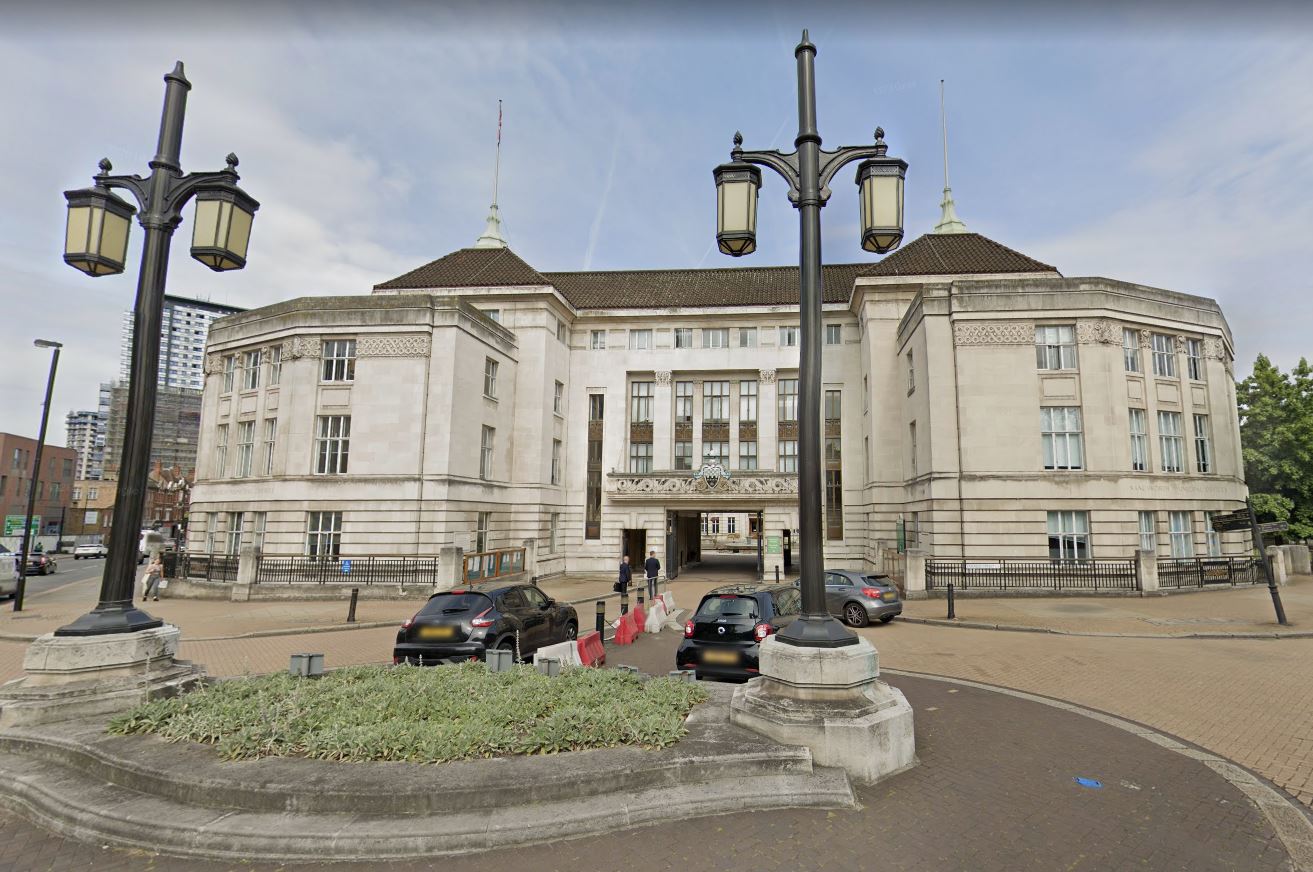
The tour started at the Battersea Art Center, which feature the plaque for Jeanie Senior (born 1828), the first female civil servant in Whitehall, for example, living at Elm House – now the site of Battersea Town Hall, and the place where Nassau entertained figures like Florence Nightingale, Lord Tennyson and George Eliot, fighting against the poverty of Victorian London as a known reformer. Her work spanned inspecting workhouses, writing reports on the state of women’s eduction, and helping build social housing in London, becoming an icon for radical reform in the capital and a powerful influence on Victorian policy.

On the other side of politics, Charlotte Daspard (born 1844) was a boundary-breaking socialist and suffragist, serving more than one prison sentence as a result of her direct action campaigns against the British government. A plaque to her stands on the building she donated to the Battersea Labour Party, still standing as their headquarters today on Lavender Hill itself.

Jeanne said:
“The reason I got started on all of this was that in 2018 we were celebrating women getting the vote, and I found out that there were 17 plaques to men in Battersea and none to women – that was an initial shock.”
She’s now run several tours in the area and 6 more green plaques from the council are due to go up in 2026, as Wandsworth’s time as the Borough of Culture in London is set to come to a close.
Clapham Junction and Lavender Hill have transformed throughout the centuries as industrialisation led to large population growth and the arrival of the railways in the early 1800s, quickly growing into a major suburb. Thousands of homes were built in the latter half of the century, transforming the area into the thriving neighbourhood it remains today. The population of the area grew from barely 6000 in 1840 to 168,000 by 1910.

Lavender Hill, therefore, became a hub for London’s emerging cultural figures as they moved to the capital, attracting people from across the world of politics, the arts, and activism at the same time that the Industrial Revolution reached its height.

Its pioneers have been inextricably linked to those consequences, with reformers like Isabella Gilmore – another woman spotlighted by Jeanne Rathbone’s tour – fighting to protect locals from the worst of London’s industrial poverty, much like the aforementioned Nassau. Gilmore became an acclaimed deaconess and a plaque still stands to her and her social work in Southwark Cathedral, with her house in Clapham Common commemorated with its own unofficial plaque.
Other women spotlighted included Olive Morris, a black activist and antiracist campaigner in the 1970s who grew up in Lavender Hill before moving to Brixton, and Marie Spartali, one of the only prominent female pre-Raphaelite painters, living and working in Lavender Gardens. In recognition of her unique status, Spartali received an official blue plaque from English Heritage in 2023 at her home in The Shrubbery.
The Battersea Society has placed blue plaques on Lavender Hill for novelist and critic Penelope Fitzgerald, as well as for playwright Tom Taylor and his wife, composer Laura Barker.

Barker wrote works based on the works of poet Lord Tennyson, their home hosting a range of Victorian personalities from Charles Dickens to Lewis Carroll and composer Clara Schumann. In 2024, when both Tom Taylor and Laura Barker received blue plaques from the Battersea Society, Barker’s descendant played a selection of her music and then-Mayor of Wandsworth appearing with actor Alun Armstrong to commemorate the occasion at Lavender Sweep on Battersea Rise.

At the time, the area was far less developed, made up of only a handful of larger houses in leafy green countryside where hundreds now stand.

Other plaques highlighted on the walk spotlight the social feminist Edith Lanchester and her actor daughter Elsa Lanchester. Their plaque stands in Leathwaite Road in Battersea. The elder Lanchester was an early suffragette and activist who gained notoriety after being forced into the Priory asylum by her family, while her daughter Elsa became an icon of the stage and screen, most remembered for her role in horror movie benchmark The Bride of Frankenstein (1935).

A joint Battersea Society and Nubian Jak Community Trust plaque on Barnard Road was also spotlighted on the tour – that one belongs to Evelyn Dove, the first black woman to sing on BBC Radio in 1925. Caroline Ganley MBE, a Labour MP from 1945-51, also had her plaque on Thirsk Road shown off, as well as prominent 1930s novelist Pamela Johnson, who spent her childhood on Battersea Rise.
Jeanne was disappointed, however, that two Jewish women that she hoped to commemorate, Ida and Louise Cook, were turned down for a green plaque for fear of antisemitic attacks, as well as Ethel Mannin, a 1940s activist and early campaigner for Palestinian rights whose inclusion was also seen as too controversial. The Cook sisters, meanwhile, were civil servants who helped Jewish refugees flee Nazi-occupied Europe, using their reputation as opera-going European socialites as cover.
The sole green plaque on Jeanne’s tour was for the Diederichs Duval Family on Lavender Sweep, that one having been placed by Wandsworth Council to commemorate the family’s work for the suffragette movement. Emily Diederichs Duval was imprisoned several times and went on frequent hunger strike in her campaigns, while her daughters Elsie and Barbara were both imprisoned for their vocal and even violent protests, alongside their son Victor, who went on to found the Men’s Political Union for Women’s Suffrage in 1910.
More plaques to come
Jeanne Rathbone, meanwhile, continues to place green plaques from Wandsworth Council in Battersea, announcing one to celebrate the lives of Hanna and Patrick Barrington, who lived in Lavender Hill. Hanna was a communist activist who escaped the Nazi regime from Vienna and married Patrick, a Guyanese artist, both renowned socialites of the area for decades and business owners locally in Clapham.
Other green plaques will be unveiled in 2026 for anti-imperialist and Indian independence activist Shapurji Saklatvala, as well as Jamaican community campaigner Yvonne Carr, who raised £1 million for a community centre at the Patmore Estate off the Wandsworth Road, which is named after her.
Meanwhile, the Battersea Society continues to commemorate its boroughs heroes with its own memorials. Their website now sports an interactive map showing off a route around the borough that encompasses several other notable sites, such as the hall where The Who recorded their album Quadrophenia, or the first black mayor of Battersea, John Archer.
More green plaques are sure to follow as 2026 continues with Wandsworth as the city’s Borough of Culture, with another three plaques planned for February alone and three more still to be placed.
Jeanne’s website charts her journey towards recognising the pioneers of Clapham, Lavender Hill and Battersea, with details of further events to commemorate local women and their rich history as well as information on her research, which spans centuries of local history.
Additional reporting and photos by Anna Caldwell.
UPDATE 17/02/2026: Jeanne Rathbone told us that two more plaques are being installed: One for Shapurji Saklatvala (more information HERE) on Friday 20th at 12 on 177 Lavender Hill Labour HQ and one for Hanna Viennese, Jewish, Communist and Guyanese artist Patrick Barrington on Friday 27th at 12 at 77 Dorothy Road, where they also ran a wine bar called The Corkscrew from the 70s to the 90s.