


A dismissed supermarket worker, a bag of Lindt Easter eggs and a slow news weekend: the ingredients for a story that went national within hours. What followed exposed not just the national media’s appetite for anti-social disorder stories, but its persistent inability to find Clapham Junction on a map.
Clapham Junction made national news over Easter following an incident at the Waitrose branch on St John’s Road. Walker Smith, an employee with 17 years of service, was dismissed after he attempted to stop a shoplifter from stealing a bag containing Lindt Gold Bunny milk chocolate Easter eggs, priced at £13 each.
A customer alerted Smith to the fact that someone had placed Easter eggs into a Waitrose bag, and the employee decided to confront the suspected shoplifter and grabbed the bag. After a brief struggle, the bag split open, the chocolates fell to the ground and the suspected thief fled the shop.
Store management escalated the matter, as Waitrose enforces a strict policy prohibiting staff from physically confronting shoplifters.
“I’ve been there 17 years. I’ve seen it happen every hour of every day for the last five years,” Smith said. “It’s everybody from drug addicts to teenagers nicking bits and bobs or walking out with bottles of wine in their arms. We’re not allowed to do anything.”
He said he acted out of frustration at repeated shoplifting incidents, having witnessed the same pattern time and again without any meaningful response from management. He also claimed that security had been scaled back, with no guards on duty on Mondays or Tuesdays.
Although Smith apologised after the incident, telling his managers that Waitrose was “like [his] family“, he was nonetheless dismissed.
Waitrose said it had followed its internal disciplinary procedure, including an appeals process, and — while declining to comment on individual cases — defended its policy of advising staff not to confront shoplifters. The company issued a general statement on Monday 6th saying:
“We’ve had incidents where our Partners have been hospitalised when challenging shoplifters. Luckily, they have always recovered, but that might not always be the case.
There is a serious danger to life in tackling shoplifters. We refuse to put anyone’s life at risk and that’s why we have policies in place that are very clearly understood and must be strictly followed.
We hope you understand that as a responsible employer, we never want to be in a position where we are notifying families of a tragedy because someone tried to stop a theft. Nothing we sell is worth risking lives for.
While we recognise the strong reaction from media reports, we must say that the reporting on this does not cover the full facts of the situation.
While we would never be able to discuss an individual case, we can assure you the correct process is being followed in this instance and we will follow our standard appeals procedure.”
Walker Smith was later offered a job by Iceland’s chairman Richard Waler who posted on LinkedIn:
“You’re welcome to a job with us. We even share the same name…“
It is not yet known whether Smith has accepted the offer. In the meantime, a GoFundMe page set up in his name has already attracted more than 700 donations, raising nearly £13,000 at the time of writing.
The Clapham mix-up: How a local incident exploded into national news
The story was initially reported in near-identical terms by both The Guardian and The Telegraph, based on an interview with Walker Smith published on Sunday 5 April over the Easter weekend, and was quickly followed by The Standard. It was swiftly picked up by most local and national outlets, with the BBC covering the incident the following day, alongside tabloids including the Express, the Sun, the Daily Mail and the Mirror.
The day after it was first reported, Shadow home secretary Chris Philp wrote to Waitrose, saying the case reflected a “wider and growing problem” and that “shopplifting is rising sharply, with offenders acting brazenly and with little fear of consequence“.
Why did a very local incident attract such widespread attention? The same story unfolding in Liverpool or Stratford-upon-Avon might not have generated the same coverage. A significant factor may well have been the name of the location itself, and the associations it carries following a series of large-scale anti-social behaviour incidents nearby just weeks earlier.
In late March and early April 2026, Clapham High Street saw several large, social-media-driven disturbances. While not a formal riot in the legal sense, they amounted to a series of large-scale youth disorders that appeared riot-like on the ground: hundreds of teenagers, property damage, a significant police response and shop closures.
Madmass in Clapham today pic.twitter.com/vS6arHlOuY
— London & UK Street News (@CrimeLdn) March 31, 2026
The key trigger appears to have been so-called “link-up” posts on TikTok, Snapchat and other platforms encouraging teenagers to gather in large numbers, rather than any organised protest. Reports described shops being swarmed, staff forced to shut their doors and some customers barricaded inside premises for their own safety.

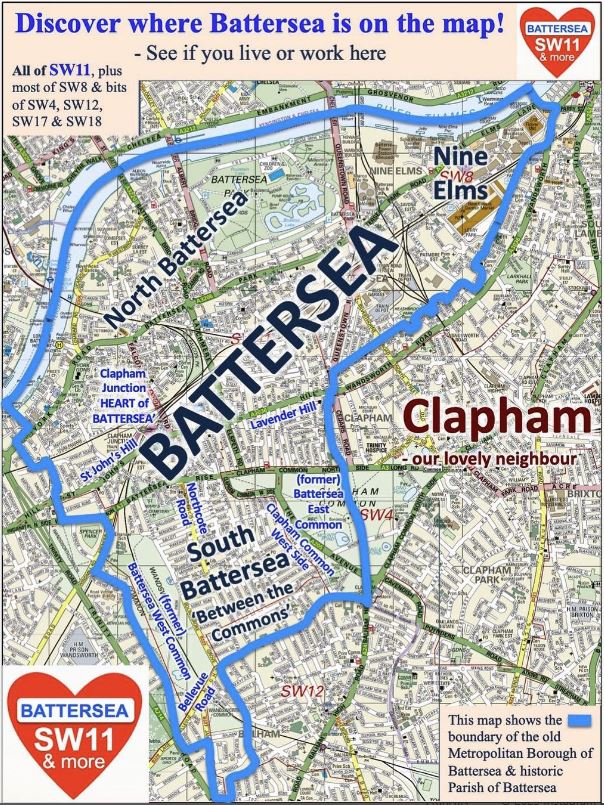
While the Waitrose incident was initially and correctly reported as having taken place at the Clapham Junction branch on St John’s Road (just a few hundred metres from Clapham Junction station, which proudly bills itself as “the Heart of Battersea“) several outlets quickly drew a connection to the disturbances that had occurred weeks earlier in Clapham proper, some 1.5 miles away and across the borough boundary in Lambeth.

The Sun made the link explicit to the Clapham riot-like in their initial article writing :
“This comes after several shops on Clapham High Street, including Waitrose, were forced to close as mobs of teenagers tore through the streets. Youngsters have been terrorising the South London suburb in social media-fuelled “link-ups” which have seen two teens arrested.”
The confusion deepened in a follow-up piece published on 7 April, which placed the store “in Clapham, South London” from the outset, and later referred to “In Clapham, as the shoplifter fled the store…” Having also quoted the former Waitrose employee correctly referencing Clapham Junction, the paper reinforced the impression that Clapham and Clapham Junction are one and the same.
The Telegraph made a similar association, noting that “a group of youths caused disorder in London last week, including invading a Marks & Spencer shop in Clapham.”
In The Standard, the conflation was displayed prominently in the headline, even though the article itself correctly identified the store as being in Clapham Junction.

The Retail Gazette, meanwhile, referred to “the retailer’s Clapham branch“.
The most unambiguous confusion, however, can arguably be found in City AM, which referred to the store solely as being “in Clapham” — stating that “Walker Smith’s sacking came after he tackled a shoplifter at a store in Clapham last week” — before dedicating the second half of the article to “a wave of shoplifting in Clapham where a crowd of youths stormed a Marks and Spencer branch in the south London suburb on multiple occasions last week.”
Whether inadvertent or disingenuous, this geographical conflation has been woven into a broader narrative in some outlets about shoplifting, staff safety and weak enforcement — including criticism of the Mayor of London and the government for failing to act. A few days before the Waitrose incident, Thinus Keeve, Marks & Spencer’s retail director, had called on Labour to do more to tackle shoplifting in a piece for The Telegraph:
“Without a Government seriously cracking down on crime and a Mayor that prioritises effective policing, we are powerless.”
In December 2024, we reported on policing in the Clapham Junction area, noting that crime rates there are relatively low compared with other parts of London, and that local police efforts are focused on regular patrols, community engagement and targeted operations.
A growing body of data is also now publicly available, including the monthly crime map, which records offences by location across the area and tracks local trends and patterns.
The Clapham reference was confusing on purpose at first
We dedicated an entire article 13 years ago about the changes that occurred in Clapham Junction between 1745 and 2011.
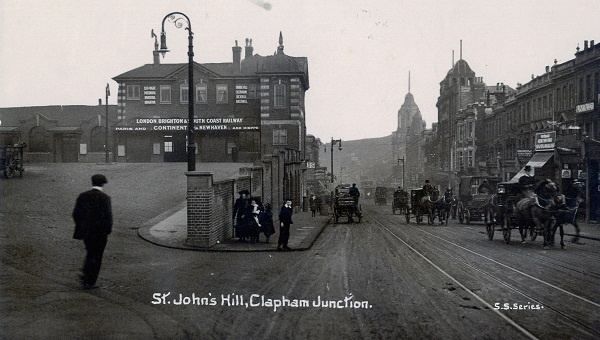
The area known as Clapham, located roughly a mile and a half east of the station in the London Borough of Lambeth, became a sought-after address for the affluent merchant classes of the City of London throughout the 18th and early 19th centuries. They built numerous grand houses and elegant villas around Clapham Common and within Clapham Old Town. By the mid-19th century, Battersea, by contrast, was firmly associated with industry and the working poor.
It was against this backdrop that, in 1863, the railway companies — in what we might today call a rebranding exercise — decided to rename “Falcon Bridge Station” as “Clapham Junction Station”. Clapham was considered at the time as a much more attractive area.
That marketing decision has generated confusion ever since, with countless individuals — and no small number of local businesses — labouring under the impression that they are based in Clapham, which lies nearly two miles down the road.
- Read our article: How Clapham Junction transformed: 1745-2011
For anyone in any doubt, a quick search online leads to Wikipedia , which states plainly:
“Clapham Junction is an urban locality around Clapham Junction railway station in London, England. Despite its name, it is not located in Clapham, but forms the commercial centre of Battersea.”
That has not stopped businesses from reaching for the Clapham name, whether because the station lends it familiarity, or because they do not understand the difference.
The new Peabody estate on St John’s Hill, for instance, is to be called “One Clapham”. To illustrate the development, the developer used a photograph taken on Venn Street near the Picturehouse Cinema — on Clapham High Street, 1.5 miles away. Peabody also noted that they had “found that many people were confused thinking it referred to Clapham Junction station itself, so we removed the word Junction“, adding that they felt this was “appropriate“.
Many local residents still recall the outcry when they discovered that the Asda on Lavender Hill had renamed itself “Asda Clapham”. Unlike other supermarket chains such as Waitrose, Asda is centralised, with most decisions taken at its head office in Leeds — and those decision-makers apparently had strong views about the geography of an area they did not live in.
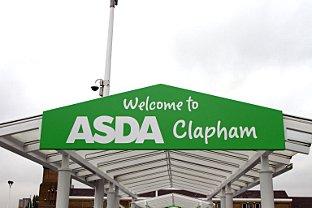
Former councillor James Cousins spent months battling with Asda in Lavender Hill for them to change their name. In September 2010, James received what can only be described as a remarkable response from the supermarket’s head office:
“Having spoke to the General Store Manager, he confirmed the store is in Clapham, this is the reasoning for the name of the store. Also if we were to change the name of the store it would lose it’s identity in the local area.”
In other words, call it “Clapham”, otherwise people will be confused (much the same logic deployed by Peabody). Rather than acknowledge the error outright, Asda eventually proposed settling the matter by public poll, as though geography were a question of popular opinion. A spokeswoman said: “We just want to go with what local people want.” By November 2010 (and following the poll!), the store had been quietly renamed Asda Clapham Junction.
A different kind of rationale was offered for naming the Travelodge directly opposite Clapham Junction station simply “Clapham”. The company explained that, while it appreciated “the location of the hotel is in between Clapham and Battersea“, it already operated a hotel called Battersea Travelodge. As James Cousins observed at the time:
“Apart from being wrong about being ‘between Clapham and Battersea’ (because they are in Battersea), I can see the logic. And it does leave open all sorts of alternative names; I was wondering about Manhattan Travelodge, it is, after all, located between Manhattan and Southend-on-Sea, but they already have a Southend Travelodge.”

More recently, the new DIY shop that replaced the former Kitchen Shoppe, just a few metres from Clapham Junction station, opened under the name “Clapham Discount Store“.
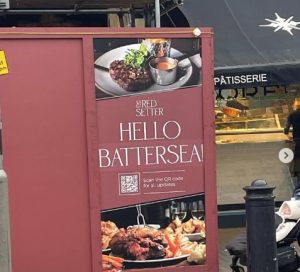
Occasionally, however, businesses are quicker to correct a genuine mistake. At the beginning of 2024, Urban Pubs & Bars — in the process of refurbishing what is now the Red Setter in Northcote Road — promptly plastered a sticker reading “BATTERSEA!” over the word “CLAPHAM” on their hoarding. A small but telling gesture.

In 2005, the community group LoveBattersea, set up by former Councillor Philip Beddows, launched a campaign to assert Clapham Junction’s rightful place within the Battersea district and to push back against the persistent misconception that it belongs to Clapham (which led to the sign “Heart of Battersea” shown above, displayed inside Clapham Junction station).