

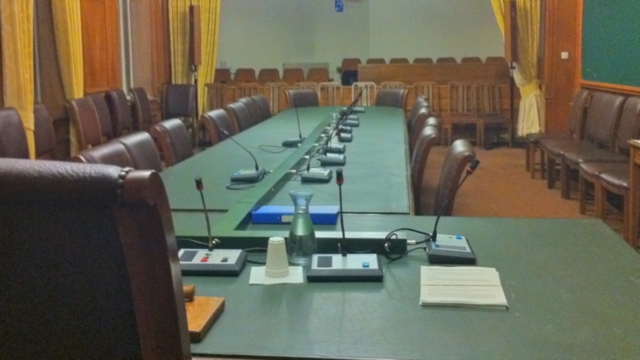
Wandsworth’s Planning Forum returned this week with a familiar agenda but lingering questions over transparency. Clapham Junction Insider uncovered evidence that the forum was once publicly listed with published minutes — contradicting the council’s argument that openness is not possible.
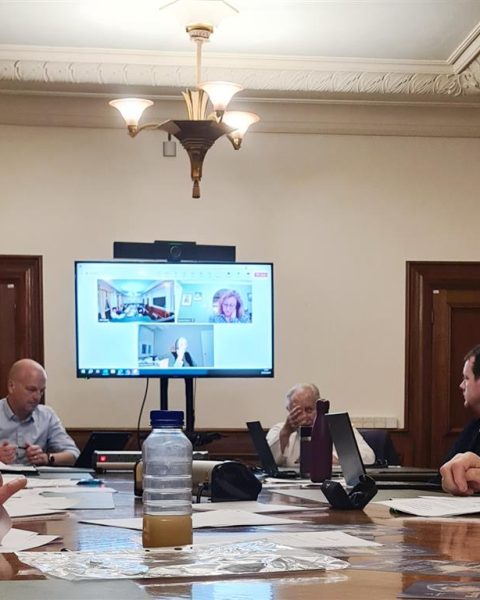
Thursday’s Planning Forum meeting opened with an unexpected change at the top. Due to a clash of commitments, the session was not chaired by Cllr Tony Belton, chair of Wandsworth’s Planning Applications Committee (PAC), but by Aydin Dikerdem, the council’s Cabinet Member for Housing.
The agenda itself appeared familiar: an update on the Local Plan, progress on the Clapham Junction Masterplan, and discussion of whether the Planning Forum should be given any form of official visibility. CJI’s findings indicate that the council’s current position on confidentiality differs markedly from earlier arrangements, when the forum was publicly listed and its minutes published.
An obscure forum by design?
The Planning Forum occupies a peculiar position within Wandsworth’s decision-making ecosystem. It is not formally part of the council’s Democratic Services structure, its meetings are not advertised, and its minutes are no longer published. Attendance is limited to a small number of co-opted representatives who are informed of meetings by email.
That lack of visibility has long been criticised by community groups. After Labour won the local elections in May 2022, 13 months elapsed before another Planning Forum meeting was organised. According to the then-chair, Councillor Tony Belton, the delay was due to Labour not being aware of how the meetings functioned.
The issue is not merely procedural. The forum is regularly used to discuss borough-wide planning policy, including the Local Plan and major regeneration frameworks, shaping understanding and expectations long before decisions reach committee. Community groups argue that, given the forum’s role in shaping borough-wide policy discussions, the public should be informed of these exchanges.
Local Plan: adoption imminent, but ambitious threshold of affordable units curtailed
One such discussion at the recent meeting concerned the Local Plan itself. Officers confirmed that the Planning Inspector’s report on the Local Plan review was expected imminently, with adoption still scheduled for the end of March.
Although the current Local Plan was formally adopted in 2023, it was drafted and consulted on before the 2022 local elections. The Labour administration elected that year had no role in shaping it and subsequently sought amendments aligned with its manifesto — notably stronger affordable housing requirements.
The amendment was looking to impose a 45% threshold for affordable housing on major residential development (50% on public and industrial land) which would constitute a fast-track option where developers won’t have to submit a viability assessment of their proposal, alongside a 70/30 split in favour of social rent, qualifying schemes for the fast-track route without viability assessments.
Officers said most changes, including the tenure split, had been accepted by the inspector. The key exception was the headline threshold, which the inspector ruled should remain at 35% to stay consistent with the London Plan.
In the background loomed last October’s joint government–Mayor announcement proposing to reduce London’s fast-track threshold to 20%. With 45% proposed, the new figure in Wandsworth would have been more than double London’s threshold, and most developers would have been likely to challenge any refusal of their proposals by Wandsworth on that basis.
Although officially the Greater London Authority (GLA) is still consulting (adoption is expected after May’s local elections), it is already acting on the basis of the new threshold. Several societies warned that this uncertainty risks developers delaying schemes and councils becoming increasingly cautious in enforcement.
- Read ou interview of Aydin Dikerdem: Make Wandsworth more affordable: the big task of the Council
Clapham Junction Masterplan: consultation under scrutiny
An update was also given on the Clapham Junction Masterplan. Officers confirmed ongoing work with Weston Williamson + Partners, with a draft report expected ahead of the next public meeting in February and a summary of progress available on the Council’s website. Surprisingly, they claim that the recent revamp of the Falcon Bridge was an achievement of the process, while this was actually decided separately and now achieved while the draft Masterplan is not even finished yet.
Councillor Dikerdem noted that many consultation responses concerned the Winstanley Estate, which borders the station’s northern side. The Council is now considering using a similar consultation structure for future engagement on the Winstanley Estate and possible revisions to its regeneration plans.
While officers described the Clapham Junction consultation as an improvement on previous exercises, the Clapham Junction Action Group (CJAG) strongly disagreed. The group criticised the process—designed and fronted by Grace Crannis and William Marr-Heenan (though the Council claims to have had no involvement)—as being driven by generic “best practice” engagement methods akin to those found in standardised manuals, rather than by the specific history and expertise of Clapham Junction community groups.
CJAG stressed that, although the intention to assemble a demographically diverse panel was welcome, the project team was explicitly informed about existing community expertise yet chose not to incorporate it into the process. As a consequence, most of the findings produced by the project team and community panel simply rehearsed ideas, concerns and proposals that CJAG had already documented in detail 15 years earlier.
Tensions were sharpened by continued secrecy surrounding the consultation’s community panel, whose membership has not been disclosed despite repeated requests.
Cllr Dikerdem acknowledged the criticism, explaining that some panel members were young people and that officers feared they might be harassed if named publicly. While attendees said they understood the desire to protect younger participants, several argued the risk was overstated and reflected a misunderstanding of community scrutiny.
The broader concern was about balance. While youth engagement is important in a future-oriented masterplan, many younger residents are transient, whereas long-term residents bring decades of lived experience. Critics argued that those long-term voices were being sidelined in favour of an anonymous panel that appeared to repackage work already done by established groups.
The forum also mentioned the growth plan produced by the Council this summer, highlighting that it had not been discussed in previous forum meetings and had received little publicity. It appears to be more of a PR exercise in response to the publication of The London Growth Plan, with sources stating the aim was to “showcase to the GLA and the government that the borough was willing to participate and build“.
If policy can be ignored, what is the Local Plan for? The Gasworks–Glassmill test
A lively exchange followed on recent planning decisions, particularly the approval of the Gasworks redevelopment and the refusal of the Glassmill scheme.
The Gasworks project — a high-rise redevelopment at Swandon Way with towers up to 29 storeys — clearly breaches both the Wandsworth Local Plan and the Wandle Delta Masterplan, which cap heights at 7–10 storeys overall and 4–8 storeys along the River Wandle.
During the March 2025 committee debate, officers argued that the “context” had changed due to nearby tall buildings, effectively redefining acceptable heights. Critics described this as untenable, given that the updated Local Plan, adopted in July 2023, was written with full knowledge of those schemes and still imposed strict limits.
By inviting councillors to disregard a freshly adopted policy framework on the basis that the area had already “moved on,” officers reframed a straightforward breach as mere “flexibility” – prompting the obvious question: what is the point of having a Local Plan if it can be set aside whenever a major scheme comes forward?
“We spent a very long time analysing and commenting on the Wandle Delta Masterplan, all for nothing,” said the Wandsworth Society. A forum member also expressed sympathy for the panel, wishing the Local Plan could be stronger to reassure the community and better guide developers.
Council sources said they strongly believed that, had the scheme been refused, it would have been called in by the Mayor of London, Sadiq Khan, and approved regardless—implying that they felt they had little real choice.
It did not take long for the Gasworks approval to be tested: the following month, Wandsworth’s Planning Applications Committee unanimously rejected the similar Glassmill scheme—a 29‑storey (scaled back from 38) tower at the base of Battersea Bridge replacing an existing glass‑clad building with 110 homes, including a late‑offered 50% low‑rent affordable housing.
As predicted by the Wandsworth Society and others at the time, Rockwell has now lodged an appeal against the refusal, with a formal public inquiry being organised.
A contradiction emerged: the same arguments about the cost of defending refusals that had been used to justify approving Gasworks were seemingly abandoned when it came to defending the Glassmill refusal.
CJI uncovers past transparency in the Planning Forum
To conclude the meeting, CJAG renewed calls for basic measures: a webpage, public agendas, and published minutes—as is standard for other advisory bodies. Following discussions at the previous Forum meeting in April 2025, the minutes (yes there are existing minutes but kept confidential!) had indicated that the matter should “be discussed further at the next meeting“.
Unlike other Council meetings, the Planning Forum’s minutes are not published (only shared by email with participants) and there is not even a mention of the existence of the meeting on the Council’s website nowadays.
CJAG argued that making minutes public – especially since other advisory groups are listed on the Council’s website – would boost transparency and local democracy. Their call, supported by the Wandsworth Society, highlighted how easy it would be for the Council to publish these records, even retrospectively.
Officers objected that “public availability of meeting minutes would involve changing from an informal to a formal meeting under the scope of Democratic Services.“.
Critics argued this position sits uneasily with the forum’s own history. CJAG mentioned that back in 2020, Jeni Jackson (Assistant Director at the time) insisted that Terms of Reference should be drafted for the Planning Forum, after noticing that “a formal framework does not exist for this meeting“.
After discussions, it was approved by the Planning Forum attendees. According to the meeting minutes in January 2020, “attendees did state that any discussions should be as open as possible and that this meeting should be open to all.” It was reinstated by Cllr Guy Humphries in July 2020, stating : “The terms of reference can be amended when necessary to assist with the smooth running of the forum and that although the forum is made up of representatives from organisations, he would welcome individuals attending who want to learn what the forum is about.” [The terms of reference can be downloaded HERE]
Evidence uncovered by Clapham Junction Insider shows that this balance was once achieved in practice. Until at least 2012, the council hosted a dedicated Planning Forum webpage (still available on web archive), with meeting dates and downloadable minutes dating back to 2007. Although the page was not always updated on time, at least it existed. That page — and all references to the forum — have since been deleted.

Although Cllr Cuff, the Chair of the PAC and Forum from 2010 to 2013, claimed his intention to resurrect regular Forum meetings, the initiative was later abandoned. A 17-month gap ensued before his successor, Cllr Sarah McDermott, organised a new meeting. Under her leadership, however, the Planning Forum became even more informal, disappearing entirely from the Council’s website. Today, only a shortlist of co-opted attendees are aware the meetings still take place.
Critics argued that there is no procedural barrier to returning to the forum’s earlier level of openness. Cllr Dikerdem said he would “look into the matter” and explore possible options.
What is the Planning Forum and how does it work
Once every six months (in theory), representatives of community groups, forums, or societies from various areas of the Wandsworth Borough focused on urban planning meet at the Council to discuss planning issues with planning officers. The meeting is chaired by the Councillor who chairs the Planning Application Committee (PAC), currently Tony Belton, and not other councillor is invited on a regular basis.
The forum serves as a platform for officers to update attendees on planning matters specific to the Wandsworth borough without discussing individual cases (as they often remind the audience!). It is also (and this was implemented in January 2018 under Conservative Councillor Will Sweet after a strong request in July 2017) a forum for discussion allowing a large space for representatives of the community to bring forward specific topics. In other words, there is a shared agenda, with – it may vary depending on the agenda – one hour dedicated to officer updates and one hour for topics from the organisations.
Disclaimer: Cyril Richert was representing the Clapham Junction Action Group (CJAG) at the Council’s meeting